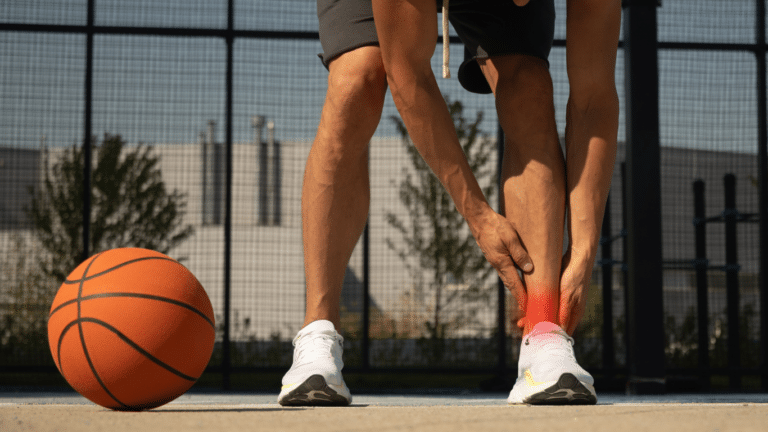
“The first few walks were fine. Then suddenly it started hurting.”
That is the most common thing we hear from people training for Hadrian’s Wall. And it is not a sign that something is seriously wrong. It is a sign that the body was not quite ready for the load being asked of it.
If you are training for the Hadrian’s Wall Path and you are already experiencing Hadrian’s Wall knee pain, this post is for you. And if you are in the early stages of training and want to avoid that problem entirely, this is also for you.
The walk itself is worth protecting. Whether you are doing a day section or the full 84 miles, this is likely something you have planned, looked forward to, and possibly booked with other people. Knee pain that forces you to pull back from training, or worse, abandon the route partway through, is not just a physical setback. It is a real loss.
Most of it is preventable.
Why Hadrian’s Wall knee pain is so common in training
Walking feels low impact. And for short distances on flat ground, it largely is.
But training for Hadrian’s Wall involves something different. Longer durations than your body is used to. Uneven stone paths and grassy terrain. Steep ascents and descents. A loaded pack on your back. And for most people, a rapid increase in weekly distance to hit a target before a set date.
That combination places repeated and progressive load through the knees. When the muscles supporting the joint are not conditioned for that level of work, the knee absorbs more than it should. As a result, discomfort builds gradually over several sessions rather than appearing suddenly from one wrong step.
That is why it feels like it came out of nowhere. It did not. It accumulated.
The part most people get wrong: downhill walking
Most people expect the uphills to cause problems. The climbs feel harder. The effort is obvious.
But the knees often struggle more on the way down.
When you descend a slope, your quadriceps work under load to control the movement and prevent you from falling forward. The knee joint absorbs significantly more force going downhill than going up. Do that repeatedly over several miles of varied terrain, and the cumulative strain on unprepared muscles and tendons is considerable.
This is why patellofemoral pain, felt at the front of the knee, is one of the most common complaints we see in people training for long distance walking. It is not caused by the climb. It is caused by the descent they did not train for.
If your training has only included flat walking so far, your knees have not yet been asked to do the hardest part of the job.
Common knee problems we see in Hexham and the Tyne Valley
Hadrian’s Wall knee pain tends to follow recognisable patterns. These are the ones that appear most often in people training for or returning from longer walks in Northumberland.
Patellofemoral pain is felt at the front of the knee, typically when going downhill, descending stairs, or after longer walks. It is the most common complaint and responds well to load management and targeted strengthening.
Tendon irritation around the kneecap or lower thigh builds gradually and tends to worsen with consecutive days of walking without adequate recovery.
General stiffness after activity is often an early signal that the knee is not quite coping with current training load. It is worth acting on early rather than waiting for it to develop into something that stops you training entirely.
Flare-ups of existing conditions, including previous injuries or arthritis, are also common when training intensity increases quickly. These do not mean you cannot complete the walk. They mean the approach needs adjusting.
5 ways to train for Hadrian’s Wall without knee pain
The goal is not to walk less. It is to prepare your body for the specific demands of this route.
1. Build distance gradually
Increase your weekly walking time progressively rather than jumping to long distances quickly. A ten percent increase per week is a reasonable guideline. Your muscles, tendons and joints need time to adapt to each new level of load before the next increase.
2. Include hills from the start
Do not leave hills until the final weeks before the walk. Your body needs sustained exposure to both uphill and downhill terrain to adapt. Start with gentle slopes and progress to steeper gradients over several weeks.
Pay particular attention to your descent technique. Shorter steps, a slight forward lean and using trekking poles significantly reduces the load through your knees on the way down.
[ Hadrian’s Wall Country official route guide — hadrianswallcountry.co.uk ]
3. Strengthen your legs
Strong muscles protect the knee joint by absorbing load before it reaches the joint itself. You do not need a gym programme. Three sessions a week of simple exercises alongside your walking will make a measurable difference.
Focus on squats, step-ups onto a low step, controlled single leg lunges, and calf raises. These replicate the demands of walking on varied terrain and build the specific strength your knees need for this route.
4. Respect recovery
Rest days are not a gap in training. They are when adaptation happens. Walking consecutive days without recovery time is one of the most common reasons people develop knee pain during training. Build at least one full rest day between longer walks, particularly in the early weeks.
5. Do a 10-minute routine before every walk
This takes less time than lacing your boots. It prepares the muscles and joints for the load ahead and reduces the risk of gradual irritation building over a session.
Do this before every training walk and before the route itself. It signals to the body that load is coming. That small preparation compounds over weeks of training.
When to seek advice
Some muscle soreness when increasing training load is normal and expected. That is adaptation.
However, some symptoms need early attention. Seek advice if pain worsens during a walk rather than easing after the first mile. Seek advice if knee discomfort persists for more than two to three weeks. Seek advice if you find yourself altering how you walk to avoid pain, or if you are beginning to doubt whether you will make the start line.
Early input from a physiotherapist usually means a faster resolution and continued training. Waiting until pain is severe typically means a longer recovery and a more complicated return to full distance.
If you are based in Hexham or the Tyne Valley and Hadrian’s Wall knee pain is already affecting your training, book an assessment now. It is easier to address this in training than on the route.
The walk is worth protecting
Hadrian’s Wall Path is one of the finest long-distance walks in the country. The terrain, the history and the landscape make it genuinely worth the preparation it demands.
Training well is not about being cautious. It is about arriving at the start line ready, completing the route without unnecessary pain, and being able to walk again the week after.
Start the prep routine this week. Progress your hills. Give your knees time to adapt.
If something is already hurting, get it seen now while it is still simple.
Book an assessment with InSync Physiotherapy in Hexham.
Frequently asked questions
Why do my knees hurt when walking downhill?
Downhill walking places greater load through the knee joint than flat or uphill walking. The quadriceps work hard to control the descent, and the knee absorbs more force with each step. If the muscles are not conditioned for this, discomfort builds gradually over time. Training specifically for downhill terrain and strengthening the quadriceps and glutes reduces this significantly.
How do I train for long distance walking without knee pain?
Build distance gradually, include hills from early in your training, strengthen your legs with squats and step-ups, and allow adequate recovery between longer walks. A short preparation routine before each session also reduces cumulative strain.
How long before Hadrian’s Wall should I start training?
Twelve to sixteen weeks gives the body time to adapt progressively to longer distances and more varied terrain. Starting later than eight weeks before the walk increases the risk of overloading before the body has adjusted.
When should I see a physiotherapist about Hadrian’s Wall knee pain during training?
If pain persists beyond two to three weeks, worsens during walks, or is changing how you move, seek advice early. Early assessment almost always results in a faster return to full training.
Ready to Start Your Recovery?
Whether you’re recovering from surgery, dealing with a sports injury, or just want to feel like yourself again, our expert physiotherapists are here to support you.
Based in Hexham, serving the wider Tyne Valley including Greenhead, Bellingham, Allendale, Matfen and surrounding areas.
Sara Mather.
Founder of InSync
Hexham