Marathon training injuries are common in the final 6 to 8 weeks before race day.
If you’re building mileage around Hexham, the Tyne Valley paths or local hill routes, this is the stage of training where small niggles often start to appear.
Tight calves.
Achilles soreness in the morning.
A knee that aches after long runs.
A hamstring that doesn’t feel quite right.
This is common especially as mileage increases. But it’s also the point where small irritations can escalate if they’re ignored.
The goal isn’t to panic.
It’s to understand what your body needs at this stage of training.
Why Marathon Training Injuries Spike 6 to 8 Weeks Before Race Day.
Around this point in a marathon plan:
Your cardiovascular fitness improves faster than your tendons adapt.
Muscles respond relatively quickly to training. Tendons adapt more slowly.
When mileage builds faster than tissue adaptation, irritation develops.
This doesn’t mean you’re “injured” it means your body is asking for smarter load management.
The Most Common Marathon Training Injuries We See
In clinic, these are the patterns we commonly assess in runners preparing for London:
Achilles Tendinopathy
Morning stiffness, soreness that improves during the run but worsens later.
Patellofemoral Knee Pain
Pain around or behind the kneecap, especially on hills or stairs.
IT Band Irritation
Outer thigh or knee pain during longer runs.
Proximal Hamstring Tendinopathy
Deep buttock pain, often worse after sitting or uphill running.
Plantar Fasciitis
Heel pain, particularly first thing in the morning.
Many runners assume these mean they must stop training entirely.
In most cases, that’s not necessary.
Warning Signs You Shouldn’t Ignore
Some discomfort during marathon training is expected. But certain patterns suggest you need to adjust:
These are signals that your tissues are struggling to keep up with load.
Early adjustment is far more effective than pushing through until race day feels at risk.
A Simple “Mid-Block Reset” If Niggles Are Appearing
If you’re noticing persistent soreness, try:
Short-term adjustment often prevents long-term disruption.
You rarely lose fitness in a week but you can gain resilience.
Marathon Training After 40. What Changes?
If you’re over 40, recovery may feel different compared to earlier years.
This is not about decline, it’s about adaptation.
With age:
Many runners reduce strength training as mileage increases.
But this is often the stage where strength becomes most protective.
Progressive loading not complete rest is what keeps tissues robust.
Should You See a Physio Before Race Day?
You don’t need an appointment for every ache.
But it’s worth booking an assessment if:
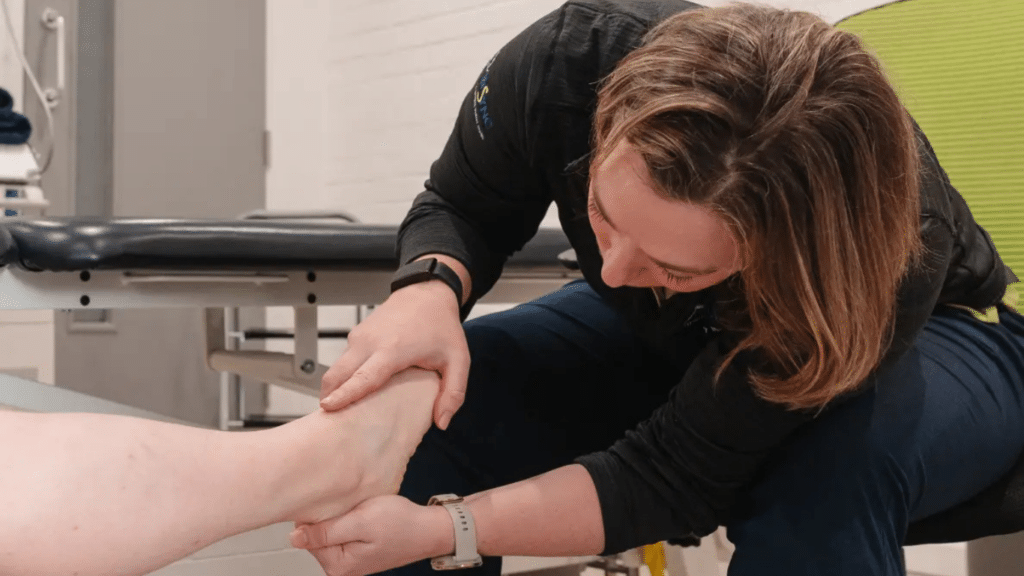
Early guidance can often keep you training rather than stopping altogether.
We regularly support runners across Hexham and the wider Tyne Valley in reaching race day feeling strong and confident, not anxious about every step.
The Aim Isn’t Just to Finish, It’s to Finish Well
The London Marathon is an enormous commitment.
With the right balance of load, strength and recovery, most niggles can be managed effectively.
Training should build confidence not constant concern.
If something doesn’t feel right, it’s usually easier to address it early than later.
If you’d like support adjusting your training or understanding what your body needs at this stage, we’re here to help.
Ready to Start Your Recovery?
Whether you’re recovering from surgery, dealing with a sports injury, or just want to feel like yourself again, our expert physiotherapists are here to support you.
Based in Hexham, serving the wider Tyne Valley including Greenhead, Bellingham, Allendale, Matfen and surrounding areas.
Sara Mather.
Founder of InSync
Hexham