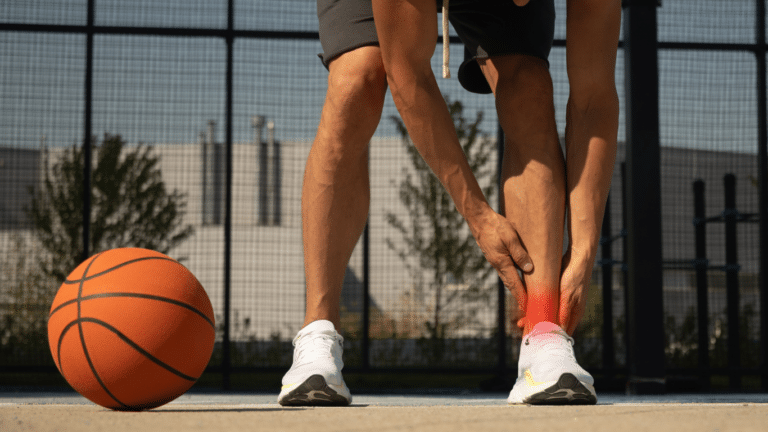
Fear after injury is not weakness; it is your nervous system trying to protect you from more pain. The problem is that this protective system often overreacts and keeps you from doing the very movements that would heal you.
Researchers describe a pattern called the fear‑avoidance cycle: you feel pain, you start to fear movement, you avoid activity, your body deconditions, and then ordinary loads feel dangerous and painful. Over time this cycle leads to weaker muscles, stiffer joints and lower confidence, even when the original tissue damage has largely healed.
For many runners this shows up as:
The psychology of fear of re‑injury
Sports psychologists use the term kinesiophobia to describe the fear of movement because of expected pain or re‑injury. Large studies in both athletes and general rehab patients show that high kinesiophobia predicts slower recovery, worse function and more disability, even when imaging looks acceptable.
Recent research in 2024 on patients after surgery found that those with greater fear of movement had poorer early outcomes, more pain and slower functional gains than those with lower fear. Similar patterns appear in lower limb injury: people with high fear scores make smaller improvements in strength, walking speed and functional tests over their rehab period.
Two key points emerge:
In other words, your mindset is not a soft extra; it is a direct performance variable in your rehab.
How fear changes movement
When you feel unsafe, your body subtly changes how you move. These changes are not random; they are your brain’s attempt to protect a region it perceives as vulnerable.
Common patterns include:
Objective force‑plate studies show that fearful athletes often unload the injured leg during jumps or squats, even when asked to distribute weight evenly. Over time this protective bias becomes a habit, and your “new normal” pattern keeps reinforcing the belief that the old injury is fragile.
This is where education and objective testing become powerful; they give your brain new, trustworthy evidence.
Education over fear: what it actually means
“Education” in rehab is more than being told to stretch or strengthen. Proper education rewrites the story your brain tells itself about your injury. When that story changes from “my back is damaged and one wrong move will finish it” to “my tissues are sensitive but robust and respond to graded loading”, your choices in daily life change with it.
High‑quality rehab education does three things:
A 2025 review on psychological factors in injury rehab noted that when athletes understand what to expect, their anxiety drops, adherence improves and return‑to‑sport rates rise. You can think of education as upgrading the operating system your brain uses to interpret every twinge and tightness.
Clinical clarity: replacing guesswork with data
Fear thrives in uncertainty: “Is my tendon strong enough?”, “What if my knee is still too weak for hills?”, “Am I loading this side more?” Clinical clarity reduces that uncertainty with specific measurements you can see on screen.
Modern clinics, including InSync Physiotherapy, use force‑plate systems such as Vald ForceDecks to measure how you load, balance and produce force through each leg. You stand, squat or jump on the plates, and the system records:
These numbers create a baseline at the start of rehab and show how you change across sessions. For a fearful runner, seeing that the previously injured leg now produces 95–100% of the force of the other leg is a concrete, confidence‑building moment.
Why numbers calm anxious brains
The anxious part of your brain speaks in questions: “What if…?” “Are you sure…?” “Is it safe…?” Clinical data gives you simple, binary anchors: yes, this leg is now as strong; no, your balance is no longer worse on this side; yes, your landing forces are within a safe range for your sport.
There is early evidence that objective feedback and biofeedback can reduce fear of movement in surgical and musculoskeletal rehab by making progress visible rather than abstract. You are not told “you are doing better”; you see graphs that show your improvement in strength, symmetry and control.
InSync’s use of ForceDecks adds another layer: you leave with an easy‑to‑read report that links each exercise in your plan to a specific test result. This direct connection between “what you feel” and “what the data says” is what many patients mean when they say they want clarity, not guesswork.
Optimism and confidence as performance variables
Optimism in rehab is not wishful thinking; it is a measurable trait linked to how well people stick to their programme and how they feel a year later. A longitudinal study of ACL patients showed that higher pre‑surgery optimism indirectly improved perceived knee function 12 months later by boosting coping and rehab adherence.
Similarly, multiple systematic reviews report that people with greater psychological readiness, self‑efficacy and confidence are more likely to return to sport and report better function after serious knee injuries. The pathway is straightforward:
In this model, confidence is not a bonus outcome; it is part of the mechanism that produces the outcome.
What optimism looks like in real rehab
In a human rehab setting, optimism shows up in small, practical ways rather than motivational slogans.
You can see it when a runner:
Clinicians can nurture this by framing progress in terms of capacity gained rather than pain avoided. For example, instead of “your heel hurts less this week”, the focus shifts to “you tolerated 20% more loading through that calf, which is exactly what we wanted”.
This framing aligns with force‑plate feedback: you are always working toward clear benchmarks that match the demands of your sport rather than chasing a vague idea of “feeling better”.
How InSync turns fear into clarity
InSync’s approach puts education and measurement at the centre of rehab so that fear does not get to define your limits. The clinic uses Vald ForceDecks to answer key questions that matter to anxious patients:
From there, the team builds a plan that fits your goals, whether that is returning to 10k races, walking hills pain‑free or resuming golf. Each test session takes 5–20 minutes, and you review the results together so you understand why each exercise is in your programme.
This structure lets you replace fear‑based decisions (“I will skip this run; what if my Achilles flares?”) with data‑informed decisions (“The tendon handled last week’s load and your force outputs are climbing; here is how we progress by 10–15%”).
From avoidance to graded exposure
The antidote to fear‑driven avoidance is graded exposure: carefully planned, progressive loading that teaches your nervous system that movement is safe again. With graded exposure, you do not jump from resting to full‑speed hills; you step through a series of tolerable challenges, each backed by data and clear criteria.
A typical pathway for an anxious runner might include:
Research shows that when fear of movement is addressed directly and paired with gradual exposure, rehab adherence improves and physical outcomes follow. You are not told to “push through” fear; you are shown why each step is safe and how it moves you closer to your long‑term goal.
How clinical clarity supports return to sport
One of the biggest questions anxious athletes ask is: “How do I know I am truly ready to go back?” Psychological readiness and fear of re‑injury are now recognised as major determinants of return‑to‑sport after injuries such as ACL tears.
Force‑plate testing helps by:
Recent work highlights that when athletes see they have reached these criteria, their psychological readiness scores improve and fear of re‑injury drops. Instead of relying on time since injury alone, you return when your numbers, movement quality and confidence line up.
A simple mental model for your rehab
To keep fear in perspective during rehab, it helps to use a three‑part mental model:
Most fear‑based decisions over‑weight “trust” and under‑weight “tissue” and “tolerance”, especially once the original injury has healed. A data‑led, educational approach rebalances this model so that your choices track reality, not worst‑case scenarios.
How to talk about fear with your physio
Many runners feel embarrassed to admit how scared they are of re‑injury and instead talk only about pain. Bringing fear into the open helps your physio design a plan that fits how your brain as well as your body works.
Useful phrases you can use in your next session:
Clinicians who work with ForceDecks and similar tools can then show you, in numbers, how your injured side compares and where you need to get to. This turns a vague fear into a specific, addressable problem.
InSync’s process in practical terms
When you book a ForceDecks assessment at InSync Physiotherapy, the session usually follows a clear, human‑centred flow.
Step by step, it looks like this:
The thread through all of this is education over fear: you are treated as a partner who deserves to understand what is happening, not as a passive patient who is told what to do.
FAQ’s
Why am I more scared now that my scan is “normal”?
Because fear is driven more by memory, meaning and uncertainty than by current tissue status. Your brain remembers the pain and wants to keep you safe, even when the structural problem has largely resolved.
Can I still recover if I am very anxious?
Yes, but anxiety needs to be part of the treatment plan, not an afterthought. When fear of movement is identified early and managed with education, graded exposure and clear feedback, people still make meaningful gains in function.
How do I know if fear is holding me back?
Look for a mismatch between what your body can do in tests and what you allow yourself to do in real life. If your strength and control are good but you still avoid basic tasks or runs, fear is likely a key factor.
What is different about a ForceDecks assessment compared with a normal physio session?
A ForceDecks session adds precise, objective measurements of strength, balance and landing forces on each side. You still do a normal assessment, but you also get numbers and graphs that make your progress visible.
Is optimism something you can train, or do you either have it or not?
Optimism can be trained like a physical skill through reframing, monitoring wins and setting realistic, progressive goals. As your data and lived experience show that you can handle more load, confident optimism usually grows.
Ready to Start Your Recovery?
Whether you’re recovering from surgery, dealing with a sports injury, or just want to feel like yourself again, our expert physiotherapists are here to support you.
Based in Hexham, serving the wider Tyne Valley including Greenhead, Bellingham, Allendale, Matfen and surrounding areas.
Sara Mather.
Founder of InSync
Hexham