Injury rehabilitation in Hexham has changed. If someone told you to rest and ice a soft tissue injury, that advice came from a protocol that the evidence has largely moved on from. At InSync Therapy, we apply current, research-led approaches ones that protect your strength and function from day one, not after weeks of passive rest.
From RICE to POLICE: The First Step Forward
RICE Rest, Ice, Compression, Elevation, became the default for soft tissue injuries after being popularised in the 1970s. For a long time, it was accepted without much question.
As research developed, clinicians began to challenge two of its core principles: complete rest and heavy ice use. Evidence now suggests that prolonged rest can delay tissue recovery, and that ice while useful for short-term pain relief may actually suppress the inflammatory response your body needs to heal.
In response, POLICE was introduced: Protection, Optimal Loading, Ice, Compression, Elevation. The shift from Rest to Optimal Loading was significant. It recognised that the right kind of movement, applied at the right time, supports healing rather than hindering it.
PEACE & LOVE: The Current Standard
The current standard for injury rehabilitation in Hexham and across the UK has moved beyond both RICE and POLICE. While POLICE was a step forward replacing complete rest with optimal loading, it still did not address the full picture of recovery. PEACE & LOVE goes further, incorporating education, psychology and progressive exercise into a framework that reflects how the body actually heals. It was first set out by Dubois and Esculier in the British Journal of Sports Medicine (2020) and has since become the approach recommended by physiotherapists and sports medicine clinicians worldwide.
PEACE covers the early phase:
LOVE covers the ongoing phase:
The inclusion of education and optimism matters. Fear, avoidance and negative expectations about recovery are now well-recognised barriers to returning to activity. Injury rehabilitation in Hexham, as we approach it at InSync, always includes helping people understand what is happening in their body and why that matters for their recovery.
Pre-Habilitation: Preparing for Surgery Before It Happens
If you are on a waiting list for a hip, knee or shoulder procedure, the time between now and your operation is valuable. Pre-habilitation, or pre-hab, focuses on building strength, improving mobility and improving fitness before surgery so that you go into theatre in the best possible condition.
Research consistently shows that structured pre-hab can support faster functional recovery, better post-operative confidence and a smoother return to daily life. It does not need to be intensive. A physiotherapist-led programme, tailored to your planned procedure, can make a meaningful difference to what comes after.
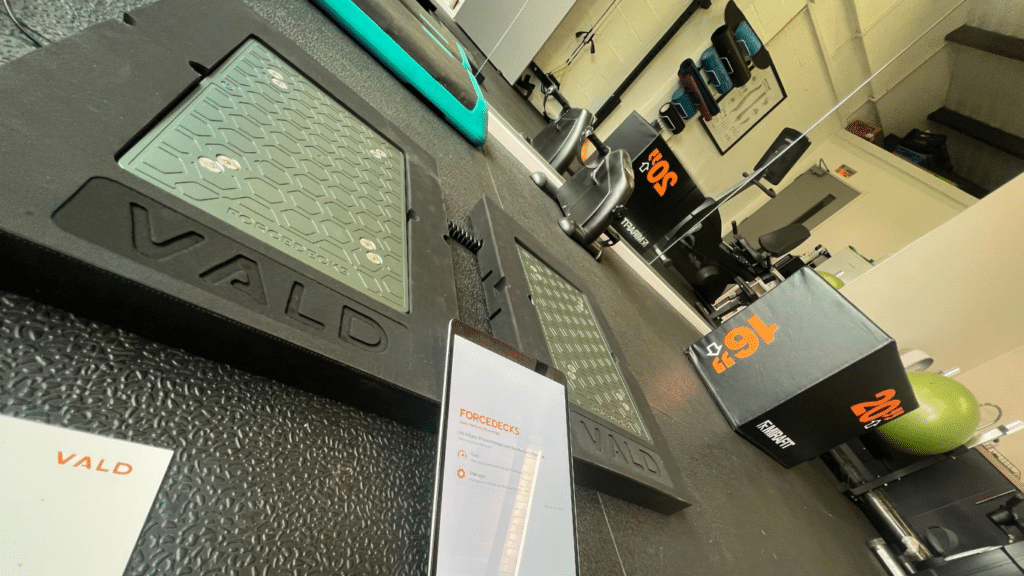
At InSync, pre-hab programmes are personalised and can include VALD strength and balance testing using ForceDecks technology to identify exactly where to focus your preparation.
Strength, Muscle and Long-Term Health
Injury aside, many people reach a point where they feel they have lost ground, less strength, less stamina, less confidence in movement. This is not inevitable, and it is not irreversible.
Loss of muscle mass is associated with increased fall risk, reduced independence and poorer long-term health outcomes. But progressive strength training is highly effective at rebuilding muscle at any age, including in older adults who have never trained before.
The challenge for most people is not motivation, it is knowing where to start, what to do and how hard to push without causing more harm. That is where physiotherapist-led rehabilitation makes a real difference.
At InSync, we use VALD technology to measure strength, asymmetries and balance objectively. That data shapes your programme from the start and tracks your progress accurately over time, removing the guesswork and giving you something concrete to work towards. Find out more about this new technology here.
If you are unsure where to begin, a structured assessment takes the guesswork away. At InSync, we use objective data to design programmes that are appropriate for your current capacity, not a generic template. That matters whether you are 35 or 75, whether you have never trained before or are returning after a long break.
Ready to Take the Next Step?
Whether you are managing a recent injury, preparing for surgery or working to rebuild your strength and confidence, InSync Therapy in Hexham is here to help.
We work with adults across the Tyne Valley including Hexham, Corbridge, Allendale, Bellingham and the surrounding area offering physiotherapy, rehabilitation and strength-focused programmes that are led by evidence and built around you.
Get in touch to book your assessment.
Ready to Start Your Recovery?
Whether you’re recovering from surgery, dealing with a sports injury, or just want to feel like yourself again, our expert physiotherapists are here to support you.
Based in Hexham, serving the wider Tyne Valley including Greenhead, Bellingham, Allendale, Matfen and surrounding areas.
Sara Mather.
Founder of InSync
Hexham