You swing your legs out of bed, put your feet on the floor and there it is.
A sharp, bruised feeling under your heel. You hobble to the kettle.
Ten minutes of pottering about and it eases off. By mid-morning you have almost forgotten about it. Then you stand up after lunch, or get out of the car after the drive back along the A69, and it bites again.
Sound familiar? You are not alone. It is one of the things I hear about most in clinic, and it tends to pick up at this time of year.
Most people call it plantar fasciitis. A lot of clinicians now prefer plantar heel pain. Whatever the name, most people do get better, and there is plenty you can do yourself to help that along.
What is plantar heel pain?
Your plantar fascia is a thick, strong band of tissue along the sole of your foot. It runs from the bottom of your heel bone to the base of your toes.
Think of it a bit like the string on a bow. Each time you walk, run or climb the stairs it tightens, supports your arch and helps spring you forward into the next step.
Plantar heel pain is when the spot where that band attaches to the heel gets irritated and sensitive to load. It is not usually one injury. More often it builds up gradually, because the tissue is being asked to do more than it is ready for right now.
Is it actually inflammation?
The “itis” in plantar fasciitis suggests inflammation. In longer-standing cases, though, the tissue tends to show changes more like those we see in tendon problems. That is one reason many physios now say plantar heel pain instead.
Why does that matter? Because it changes what you do about it. If the tissue is mainly under-prepared for load, rest on its own is rarely the whole answer. The aim is to build the foot and calf back up.
Why do those first steps hurt so much?
This is the classic sign, and the NHS lists it as a key one.
When you are asleep, or sitting for a while, your foot relaxes with the toes pointing slightly down. The plantar fascia and calf settle into a shortened position. Then you stand up and load the foot suddenly, and that sensitive tissue has to lengthen and take your full body weight in one go.
Move around and things warm up. The pain usually eases. Stand or walk for a long time, or sit down and get up again, and back it comes.
Worse, better, worse again. That rhythm is actually useful. It tells us the tissue is sensitive to load. It does not mean you are damaging it every time you walk.
Who tends to get it?
The NHS says you are more likely to get plantar heel pain if you:
Here in the Tyne Valley I see some familiar patterns:
Usually it is not one big change. It is a couple of small ones landing at the same time.
Why it flares up in late autumn and winter
The season itself is not to blame. But some winter habits quietly add load to the heel:
None of this is anything to be frightened of. It is just worth knowing, so you can make a few small changes.
Plantar heel pain, or something else?
Not all heel pain is the same. Pain at the back of the heel, where the Achilles tendon attaches, is a different problem. I have written about Achilles tendinopathy separately.
Plantar heel pain is felt underneath the heel, and sometimes along the arch. It is more likely to be this if:
Other things can cause pain around the heel too, including nerve-related pain and, less commonly, stress fractures. So if yours is not following the usual pattern, get it properly assessed.
What actually helps
There is no single cure. I am wary of anything that promises one. What tends to work is calming things down first, then building capacity back up.
1. Adjust the load, do not abandon it
You do not need to stop walking. You may just need to do a bit less for a while.
Shorter, more frequent walks instead of one long one. Softer ground. Swapping a run for a cycle or a swim for a couple of weeks. Low-impact activity keeps you fit without irritating the heel.
A simple guide that lots of people find useful: a little discomfort during activity that has settled by the next morning is usually fine. If your first steps the next day are noticeably worse, you probably did a bit too much.
2. Look at your footwear, especially at home
Often the quickest win.
3. Get those first steps ready
Before you get out of bed, give your foot a gentle warm-up:
It sounds like nothing. But getting the tissue ready before you load it often takes the edge off that first hobble.
4. Stretch the calf and sole
Gentle stretching of the calf and the bottom of the foot has been part of treatment for a long time, and the NHS recommends it.
The classic calf stretch against a wall works well. Do it with the knee straight, then with the knee bent, and you cover both main calf muscles. Hold each for around 30 seconds, a few times a day. You should feel a pull, not sharp pain.
5. Strengthen, then progress
This is the bit people most often miss.
Your calf and foot muscles share the job of absorbing load with the plantar fascia. Stronger muscles, easier time for the heel.
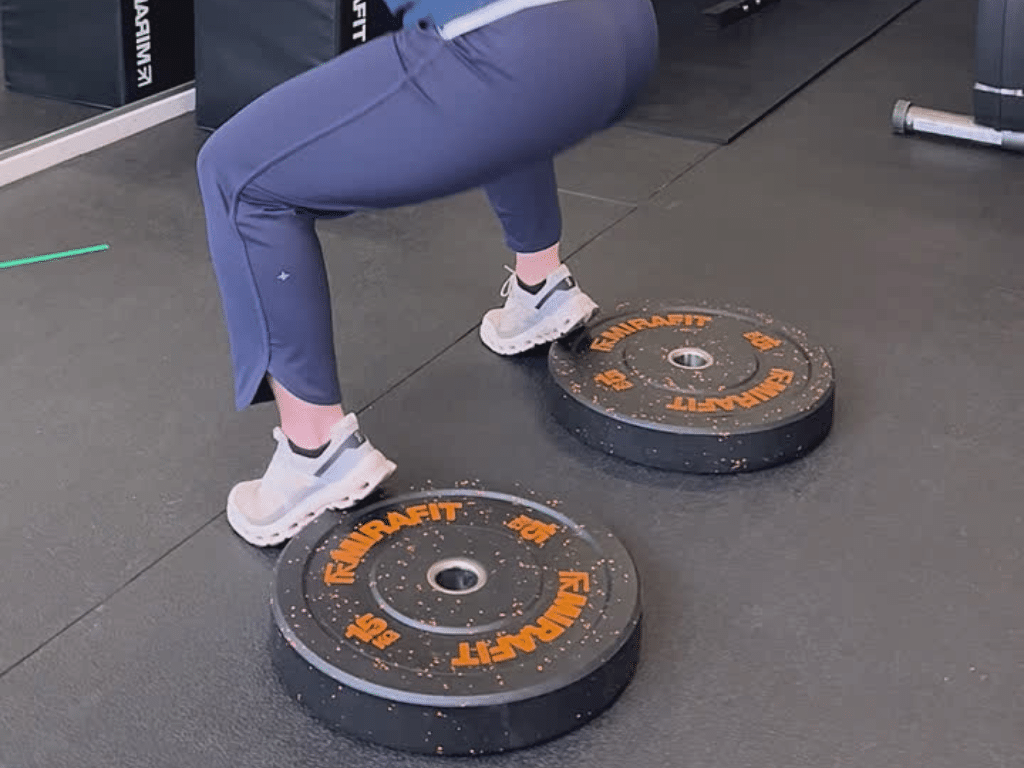
Research suggests a progressive, heavier strengthening approach can help. One trial by Rathleff and colleagues in 2015 found that people doing slow single-leg heel raises, with a rolled towel under the toes, reported better outcomes at three months than people who only stretched.
A simple way to start:
- Stand on a step, holding a rail for balance.
- Rise up slowly onto your toes, over about three seconds.
- Pause briefly at the top.
- Lower slowly, over about three seconds.
Start with both feet. When that gets easier, go to one foot, then add a rolled towel under the toes or a rucksack with a little weight in it. It should feel like hard work. Your pain should not be getting steadily worse, though.
It takes a few weeks for this kind of exercise to make a difference. Stick with it.
6. Give it time
Part of what makes plantar heel pain so frustrating is that it can be slow. Many people improve over several months. Steady progress is far more realistic than a sudden fix.
So what does heading in the right direction look like? First steps that are a bit less sharp. Standing for longer. Getting through a walk without the heel building up as much.
What about injections, shockwave and other treatments?
If a good programme of self-management and exercise is not helping, there are other options. The NHS mentions steroid injections and extracorporeal shockwave therapy for people whose symptoms persist. Occasionally a specialist referral is needed.
These usually come once the basics have had a fair go. Not as a first step. And even then they work best alongside carrying on strengthening the foot and calf, not instead of it.
When should you get your heel checked?
You can manage a lot of plantar heel pain yourself. It is worth getting assessed, though, if:
An assessment helps confirm what is going on and rule out other causes. You also come away with a plan that fits your feet, your activity and what you want to get back to. And you do not need a GP referral to see a physiotherapist privately.
You do not have to hobble through winter
Heel pain can make every morning feel like a small battle. It can put you off walks, runs and days out, right when getting outside matters most for how you feel.
But it is common. It is well understood. Most people get better. Changing your footwear, easing off the load a little and sticking with some strengthening can make a real difference.
I am not trying to wrap your feet in cotton wool. I want them strong enough to carry you round the Abbey grounds in Hexham, along the Tyne and up onto the Wall again, comfortably.
Over to you
Have you had that first-step heel pain in the morning? What helped you most? New shoes, stretching, strengthening, something else? Tell me in the comments below. It may well help someone else who is hobbling to the kettle tomorrow morning.
Sara Mather, Founder of InSync Therapy, Hexham. Serving the wider Tyne Valley including Corbridge, Haydon Bridge, Allendale, Bellingham and surrounding areas.
Useful links
- NHS: Plantar fasciitis
- InSync: Achilles Tendinopathy Hexham
- InSync: Physio Without a GP Referral in Hexham
Frequently asked questions
Ready to Start Your Recovery?
Whether you’re recovering from surgery, dealing with a sports injury, or just want to feel like yourself again, our expert physiotherapists are here to support you.
Based in Hexham, serving the wider Tyne Valley including Greenhead, Bellingham, Allendale, Matfen and surrounding areas.
Sara Mather.
Founder of InSync
Hexham